|
|
Focus on Kent genealogy
|
|
 See my page on Facebook |
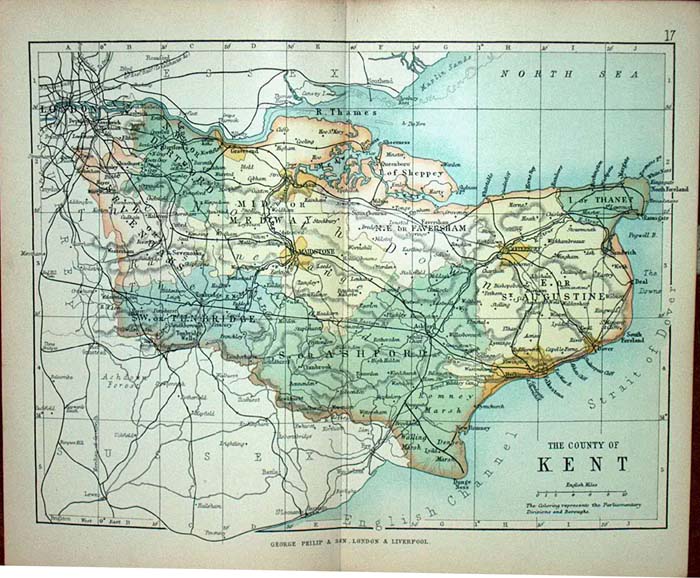
Kent lies to the south-east of London, stretching from the Medway towns in the north to Dover in the east and Tunbridge Wells in the south. Known as the “Garden of England,” Kent has a rich and varied history shaped by its geography, agriculture, and strong maritime connections. Over time, the county’s boundaries have evolved. Areas that are now part of south-east London were historically within north-west Kent but were gradually absorbed into Greater London during the nineteenth and twentieth centuries. More recently, the Medway towns — Rochester, Gillingham, Chatham, and Rainham — became part of the unitary authority of Medway, leaving the remainder as the modern county of Kent. Traditionally, Kent was divided into two distinct cultural regions by the River Medway. Those living to the west were known as “Kentish Men,” while those to the east were referred to as “Men of Kent.” This historic distinction can still be reflected in records and local identity. Your Kent ancestors’ lives would often have been shaped by their location within the county. Inland, many people worked in agriculture, from hop growing and fruit farming to general rural labour. Along the coast and the Thames estuary, livelihoods were more closely tied to maritime industries such as fishing, shipping, dock work, and naval activity. The country town is Maidstone, home to the Kent History and Library Centre (Kent Archives) - a key resource for family history research. Additional important repositories include the Medway Archives Centre in Strood and the Canterbury Cathedral Archives, each holding unique collections that can provide valuable insights into your Kent ancestry. By
understanding Kent's distinctive regions, industries and changing
boundaries, you can trace your ancestors more accurately and uncover
the rich story of your family's past. The map below shows Kent towards the end of the 19th century. Click on the map for a larger version.
|
|
|
Copyright © Family History Research |